
Infernal Tastes and Visions of Wellness: Taking the Waters at a Tuscan Drinking Spa
by Erin E. Lynch
Note: The following is an excerpt from the sensory design review of the same name published in The Senses and Society, which can be read in its entirety here.
Abstract:
This sensory design review explores the practice of “taking the waters” at a Tuscan drinking spa (the Terme Tettuccio in Montecatini Terme, Italy). The grandeur of the Terme Tettuccio reflects its sparkling reputation in the European spa culture of the late 19th and early 20th century, where spas emerged as cathedrals of consumption characterised by both sensory variety and sociability. While immersion in spa waters is a mainstay of modern leisure, the ingestion of them has largely fallen out of fashion. Nevertheless, the drinking cure lives on in the Terme Tettuccio, where even tourists ostensibly there to devour the place with their eyes have trouble resisting a (terrible) taste. As such, the Terme sits at the intersection of shifting wellness cultures, wherein the drinking cure becomes a spectacle consumed as much with the eyes and ears as with the mouth and tongue. The spa’s infernal tastes and architectural flourishes hint at a bygone era in which the sensory experience of the spa was less uniformly pleasurable but arguably more variable than the pre-packaged version that dominates wellness culture in much of the West. Beyond its four hot springs, the Terme provides a veritable mixing gallery of spa sensations and sensibilities.
Keywords:
spa culture; wellness; tourism; drinking cure; sensory design
A UNESCO World Heritage Site and Great Spa Town of Europe, Montecatini Terme is both a unique and a familiar story – once a glittering bastion of Tuscan spa culture, the town was hit hard by shifting wellness cultures combined with the loss of tourist traffic during the pandemic, and by 2024 the spa town and its thermal park were visibly fraying around the edges. Nestled below the medieval village of Montecatini Alto – where the likes of Leonardo DaVinci once travelled to sell his wares - the town grew up around the hot springs. The spa’s website boasts its 700 years of history and visits from glitterati like Madonna, as well as declaring it has “the most effective hot mineral waters in Europe” (Terme di Montecatini n.d.). Rather than one single spa complex, the Terme Montecatini offers an assortment of ways to “take the waters” – from the Art Nouveau-meets-Neoclassical splendour of the Terme Tettuccio drinking spa (where taps dispense the “drinking cure” of Montecatini’s four hot springs) to the sharp glass lines and modern aesthetics of the Redi Thermal Complex (where more familiar spa treatments like mud baths and thermal therapy are available). These seemingly disparate spa experiences are woven together by the Parco di Terme, a sprawling green space at the heart of the town. However, several other buildings in the thermal park are shuttered or fenced off, their windows offering only the occasional peek at the grandeur that once lay within. Vines lick at the edges of the once grand Terme Excelsior’s ornate exterior, as though the park is waiting for its chance to eat it whole.
This sensory design review explores the experience of “taking the waters” at Terme Tettuccio, a site I argue sits at the intersection of shifting wellness cultures, where the drinking cure is just as often a spectacle consumed with the eyes and ears as with the mouth and tongue. Fed by the four mineral-rich waters of Montecatini – Leopoldina, Tettuccio, Regina, and Rinfresco – the Tettuccio takes its name from the small wooden roof that covered the original Bagna Nuovo (“new bath’) building established on the site in 1370 (Touring Club Italiano 2013, 21). Looking at the Tettuccio’s roof now – adorned with Carrara marble statues, Art Nouveau swirls of wrought-iron and stained glass – the building’s humble name seems quite ironic. The current grandeur of the Tettuccio reflects the spa’s sparkling reputation in the European spa culture of the late 19th and early 20th century – while the original (‘modern’) baths on the site were erected in the 1700s, the Terme was rebuilt in the 1920s according to the vision of Florentine architect Ugo Giovannozzi to better resemble the prototypical Roman Baths – a Neoclassical temple to the powers of the drinking cure (21-22) (see Figure 1).
The practice of “taking the waters” for wellness is a long and storied one, tied up with intersecting discourses of spirituality and health. Throughout European history (and elsewhere), springs and wells were often framed as “marking the boundaries between human and spiritual underworlds” (Foley 2011, 470); healing springs often coincided with places of worship (Bassani 2019) and were the site of rituals designed to restore health and tap into the curative powers of both the waters and their spiritual undercurrents (Bassani 2019; Foley 2011). Elements of this ritualized engagement with hot springs arguably persist in more modern, fashionable iterations of the spa (Foley 2011); the branded “Nordic” spa experience popular in North America, for example, is characterized by the rhythmic cycles of balneology (hot-cold-rest) and other ritualized performances of wellness (Lynch 2023).
Far from the more palatable variety of “taking the waters” popularized in modern Western wellness culture, however, the process of taking the cure in medieval and Renaissance times required a level of endurance. By the Renaissance period, both soaking in and drinking the water was a common treatment for malady amongst both upper and lower classes, but – rather than a relaxing spa day – it could often be a weeks-long process that drove Renaissance spa goers to the point of exhaustion (Mack 2000, 257-259). As Mack (2000) writes, “the actual curative process involved in thermal bathing was to be more endured than enjoyed” (263). Fashions of bathing varied, however, from the more staid (gender-divided) Tuscan springs to the relative liberty and sensual temptations of the German baths. Florentine scholar Poggio Bracciolini, for example, describes watching bathers at Baden dance and play music while in the water, no doubt to help wile away their long prescribed hours (see Mack 2000, 268).
European spas were historically sites of relative social mixing (accessed by men and women, poor and rich alike – albeit sometimes in separate quarters) (Benedict 1995; Mack 2000). However, by the 17th century, class divisions in preferred patronage marked out the spa as a more exclusive space; “spas assumed a class signature since ‘taking the waters was associated with gentlemanly ideals of rustic retreat, expressed within a pastoral mythology of leisure and pleasure’” (Benedict 1995, 203). While lower class patrons continued to visit hot springs and take the waters for their health, the wealthier began to see spas as sites of “society, consumption, and display” that took on the “sociabilities of coffee house and carnival” (204; see also Freeman 2021, Freeman 2022). Through the commercialization of leisure, the spa became a place to see-and-be-seen in proper society.
….
[End of excerpt]. To read the remainder of this review please see Lynch (2026) in The Senses and Society .
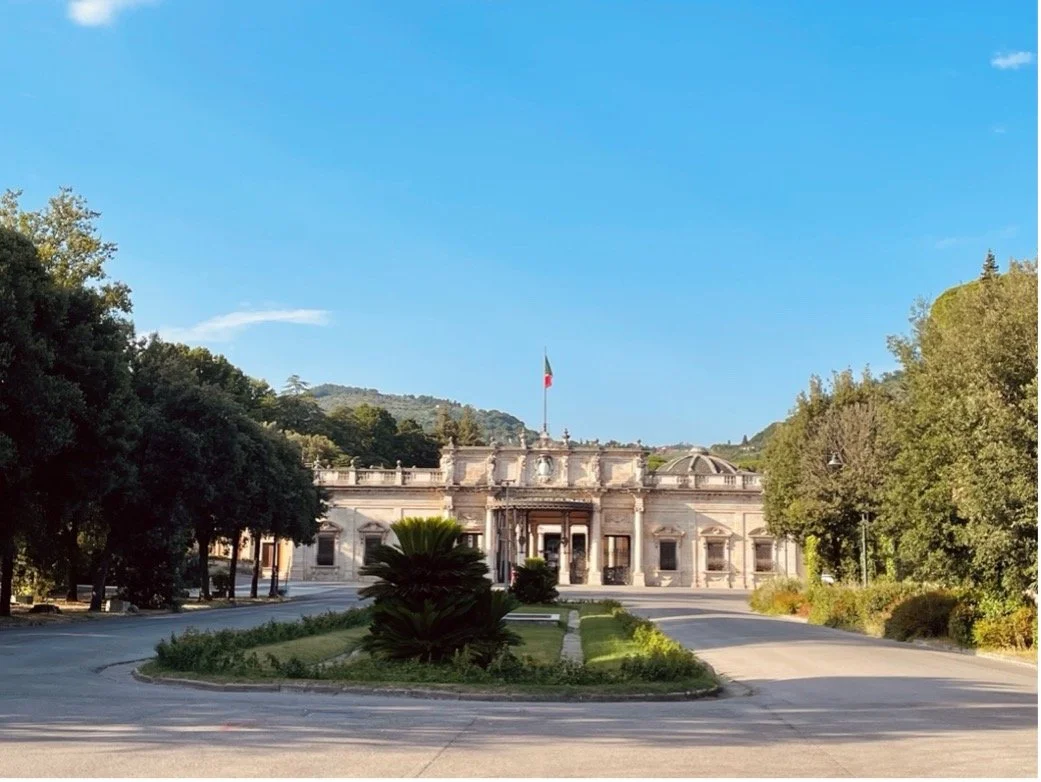
Figure 1 The Neoclassical exterior of the Terme Tettuccio, nestled in the heart of Montecatini Terme’s thermal park.
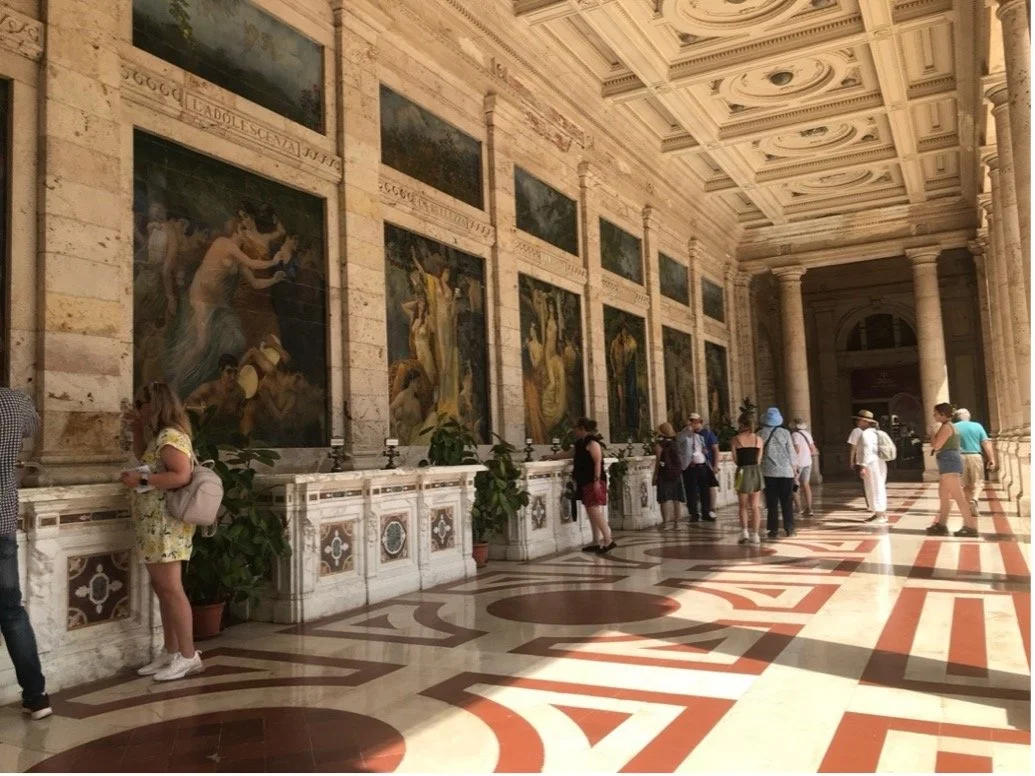
Figure 2 Visitors sample the drinking cure at the "mixing gallery," where taps pipe the spring water (often hot and sulfuric) into the cups and hands of wellness-seekers and tourists alike.
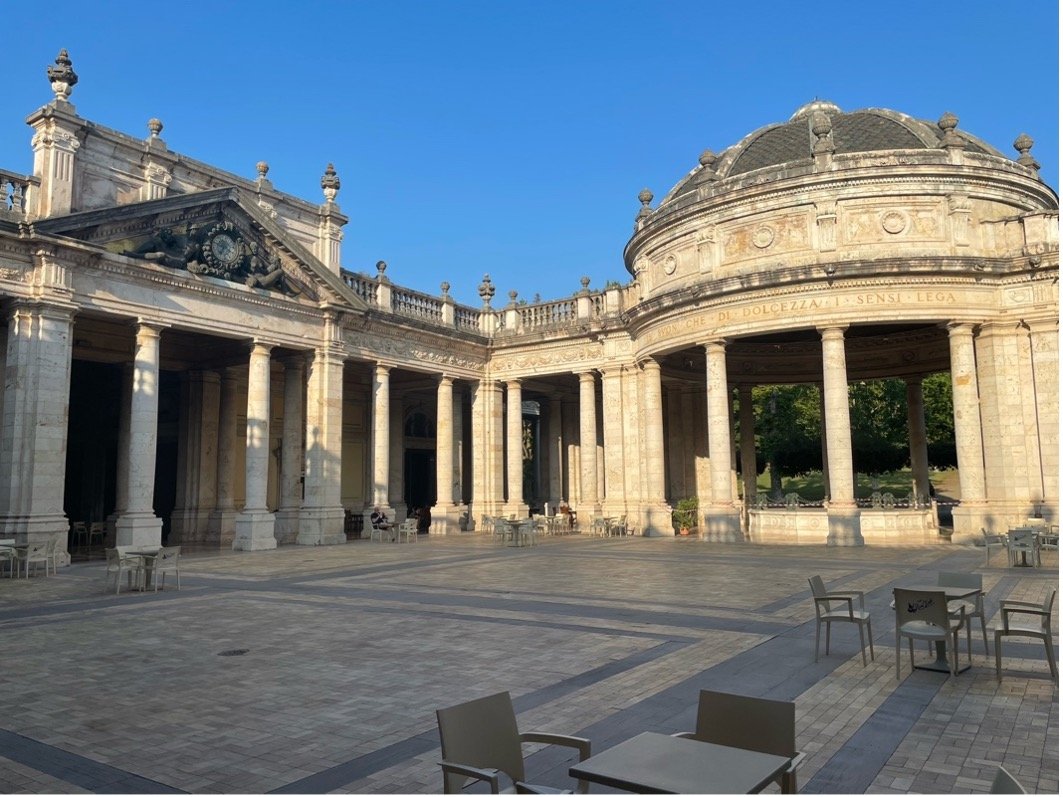
Figure 3 At the heart of the Tettuccio - directly opposite the mixing gallery - is the Temple of Music. The ornate roof of the orchestra stage is inscribed "Il suon che di dolcezza di sensi lega" (or "The sound that binds the senses with sweetness.")
Works cited:
Bassani, Maddalena. 2019. “Shrines and Healing Waters in Ancient Italy. Buildings, Cults, Deities.” In Rethinking the Concept of ‘Healing Settlements’: Water, Cults, Constructions and Contexts in the Ancient World, edited by Maddalena Bassani, Marion Bolder-Boos & Ugo Fusco, 9-20. Bicester: Archaeopress.
Benedict, Barbara. M. 1995. “Consumptive Communities: Commodifying Nature in Spa Society.” The Eighteenth Century , 36 (3): 203-219.
Braun, Julius, & Ludwig Rohden. 1875. On the Curative Effects of Baths and Waters: Being a Handbook to the Spas of Europe. London: Smith, Elder, & Company.
Freeman, Kirrily. 2022. The town of Vichy and the politics of identity: stigma, victimhood and decline. London: Palgrave Macmillan.
Freeman, Kirrily. 2021. “Performing Leisure as Labour in the Queen of Spas: Tourism, ‘Cure-ism’, and Masquerade in Third Republic Vichy.” Journal of Tourism History, 13 (1): 1-28.
Foley, Ronan. 2011. “Performing Health in Place: The Holy Well as a Therapeutic Assemblage.” Health & Place, 17 (2): 470-479.
Lambert, Roseline. 2022. “Prendre un bain de feu et de neige ou comment ma peau est devenue rivière.” Explorations in Sensory Design. Accessed online: https://www.sensorydesign.ca/prendre-un-bain
Lynch, Erin. E. 2023. “Constellations of (Sensual) Relations: Space, Atmosphere, and Sensory Design.” In The Routledge International Handbook of Sensory Ethnography, edited by Phillip Vannini, 204-214. London: Routledge.
Mack, Charles. R. 2000. “The Wanton Habits of Venus: Pleasure and Pain at the Renaissance Spa”. Explorations in Renaissance Culture, 26 (2): 257-276.
Terme di Montecatini (n.d.). Accessed online: https://www.termemontecatini.it/en/
Touring Club Italiano. 2013. Montecatini Terme and the Nievole Valley (brochure). Milan: Touring Editore.